
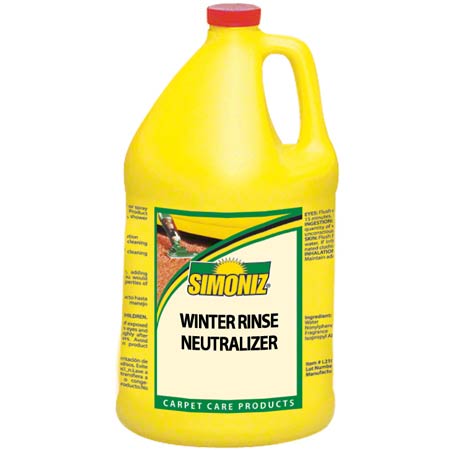
If you manage a facility in Buffalo or anywhere with real winter, you already know the problem. Salt gets tracked in, leaves a gritty film, and turns into ugly white stains on vinyl, ceramic tile, terrazzo, and even carpet. Worse, those deposits can interfere with floor finish adhesion and make “clean” floors look dull.
That is where winter rinse neutralizer products earn their keep. Simoniz Winter Rinse Neutralizer is built specifically for winter salt removal and for neutralizing stripper residue so your floors are actually ready for finish, not just “mopped and hoping for the best.”
Why is winter salt so hard to remove?
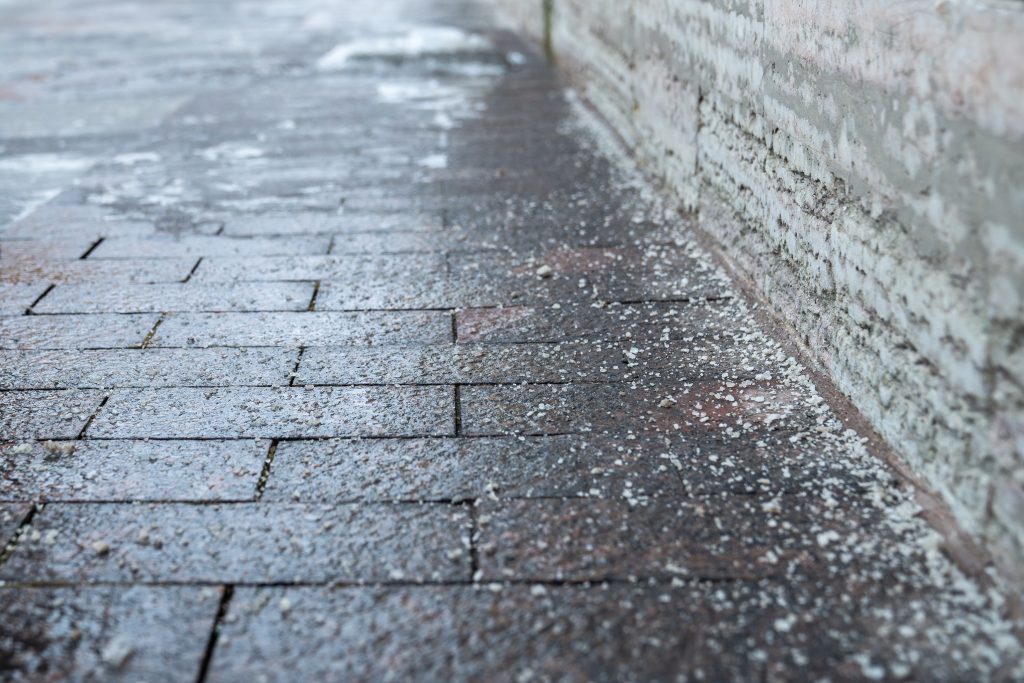
Winter salt and deicers are designed to dissolve in moisture, then dry back down as crystals. Those crystals cling to surfaces and can keep reappearing after routine cleaning. The result is:
White streaks and “chalky” residue
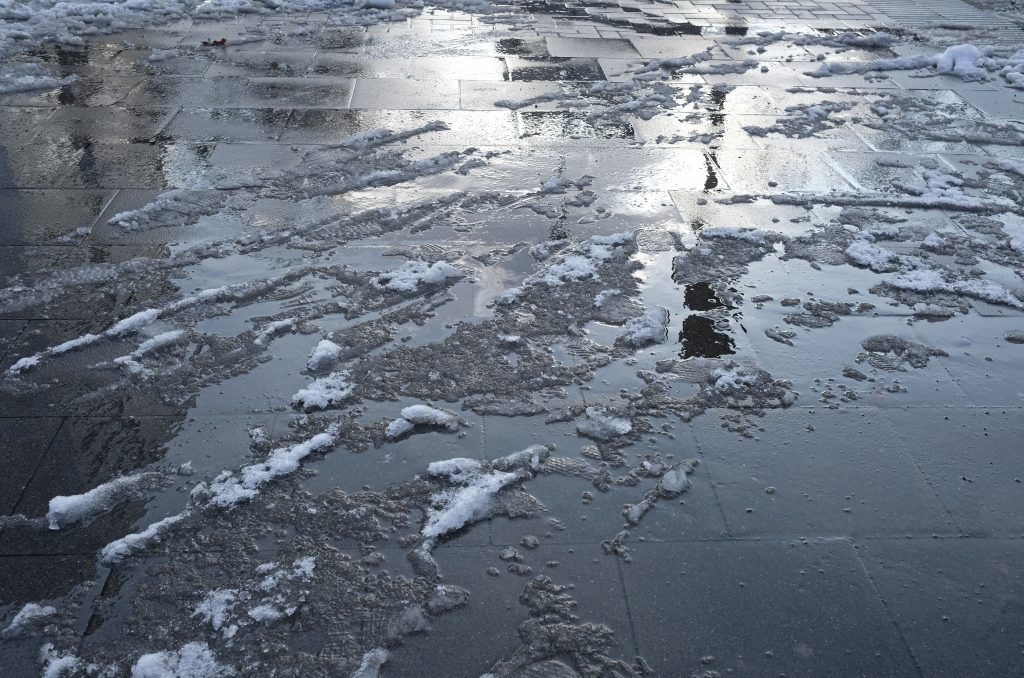
Slippery film in entries and main traffic lanes
Carpet salt rings that look like permanent stains
Equipment film from melted snow and chemical splash
A winter salt remover needs to do more than smell nice. It has to break down the deposit and rinse clean.
What is Simoniz Winter Rinse Neutralizer designed to do?
Simoniz Winter Rinse Neutralizer is an acid-based neutralizer formulated to remove winter salt and chemical stains from floors, carpet, and equipment. It is also a floor stripper neutralizer used before applying floor finish.
Key specs that matter in the real world
Low pH formula, listed at pH 3.5
Low foam neutralizer for easier rinse and recovery
Works across vinyl floors, carpeting, terrazzo, and ceramic tile
If you are looking for a salt neutralizer for floors that also supports better finish results, this checks both boxes.
How to use the winter rinse neutralizer for floors?
This section is for day-to-day winter maintenance and post-storm recovery.
Step 1: Mix the right dilution
To remove winter salt from floors, use a 1:40 dilution (3 oz per gallon).
For lighter cleaning, the label allows 1 to 128, which is 1 oz per gallon.
Step 2: Apply and allow dwell time
Apply with a clean mop and allow 3 to 5 minutes dwell time.
That dwell time is where the chemistry does the work. Rushing it is one of the biggest reasons salt film “comes back.”
Step 3: Rinse with clean water
Rinse with clean water after dwell time.
If you skip the rinse, you often leave behind loosened salts that dry as haze.
Practical tip: Focus on entry mats, vestibules, and the first 30 to 50 feet of traffic lanes. That is where the salt load is highest and where complaints start.
How to remove salt stains from carpet with a carpet extractor?
Salt stains in carpet are usually wick-back issues. You remove some, it dries, and the ring returns.
To remove salt stains from carpet, use a 1:40 dilution with cold water in a carpet extractor.
This is a reliable approach to treating salt stains in carpets when paired with proper extraction and airflow.
Practical tip: After extraction, speed dry with air movers. Slow drying increases the wick back.
Using it as a floor stripper neutralizer before the finish
After stripping, many floors fail not because the stripper “did not work,” but because the floor was not properly neutralized.
Simoniz Winter Rinse Neutralizer is specifically labeled to neutralize the floor stripper before the finish.
This step helps remove residual alkalinity and improves the odds of a better finish appearance and adhesion.
Equipment salt film removal for winter operations
If you maintain autoscrubbers, carts, or other equipment exposed to winter chemical splash, you know that residue can build fast.
For heavy film on equipment, the label directions call for diluting at 6 oz per gallon, spraying on, allowing 3 to 5 minutes, then rinsing.
That is a straightforward equipment salt film removal process that keeps the gear cleaner and easier to maintain.
Common mistakes that keep salt and stains coming back
Using the wrong product for the chemistry
Salt needs a true low pH neutralizer, not a neutral cleaner that just masks the issue.
Skipping dwell time
If you apply and immediately rinse, you are basically doing a light rinse, not actual salt removal.
Not rinsing after treatment
A salt stain remover still needs a clean rinse to fully carry away residues.
Using it on acid-sensitive surfaces
The label notes that it is not recommended for surfaces damaged by acids and that it should be tested in an inconspicuous area.
FAQ
What is a winter rinse neutralizer used for?
A winter rinse neutralizer is used to remove winter salt and chemical residue from floors and carpet and to neutralize stripper residue before applying floor finish.
Can I use Simoniz Winter Rinse Neutralizer for salt removal on vinyl floors?
Yes. The label lists vinyl floors as a use surface and provides a dilution for neutralizing salt on floors.
How do I remove salt stains from carpet without them coming back?
Use a carpet extractor with the recommended dilution, extract thoroughly, and speed-dry to reduce wick-back.
Is this product safe for every surface?
No. It is an acid-based neutralizer, and the label advises avoiding surfaces damaged by acids and testing first.
A winter rinse neutralizer that solves two problems at once
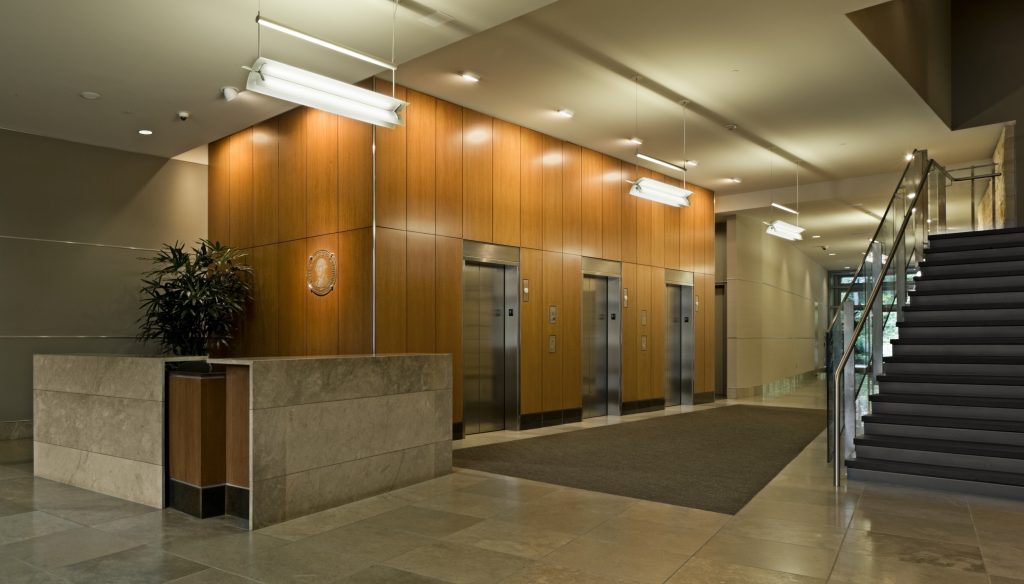
If winter traffic is leaving haze on VCT, streaks on ceramic, or rings in carpet, Simoniz Winter Rinse Neutralizer is a practical choice. It is built to tackle winter-salt removal and also functions as a floor stripper-neutralizer, so your next coat of finish has a cleaner, more stable surface to bond to.
When you want help dialing in dilution rates, choosing the right mop or extractor setup, or building a winter entryway process that actually holds up, contact HJS Supply. We will help you match the right chemistry and workflow to your facility so you spend less time chasing salt and more time keeping floors looking sharp.