Restroom odors are a year-round challenge in commercial facilities. But if you have noticed complaints picking up as temperatures climb, you are not imagining it.
Heat and humidity accelerate the biological processes that cause restroom odors. Organic material in floor drains, grout, and hard-to-reach surfaces breaks down faster in warm conditions. Drain traps dry out more quickly when HVAC systems are running constantly. The result is a facility where restrooms that seemed manageable in April are generating real complaints by June.
Commercial restroom odor control in summer requires a more aggressive and consistent approach than in cooler months. The facilities that stay ahead of it have the right product combination in place before the season peaks, not after the first round of complaints comes in.
Why Summer Makes Restroom Odors Worse
Understanding the cause makes the solution more straightforward.
Biological activity speeds up in heat. Bacteria and organic matter in floor drains, grout lines, and beneath fixtures break down more quickly as temperatures rise. More biological activity means more odor-producing byproducts.
Humidity keeps odors airborne longer. Humid air holds odor molecules more effectively than dry air. The same level of odor-producing buildup smells significantly worse on a hot, humid day than on a cool, dry one.
Dry drain traps allow sewer gas into the building. Drain traps rely on a water seal to block sewer gases from entering through floor drains. In summer, when HVAC systems run hard and facilities are less frequently used in certain areas, those traps can dry out. The result is a sewer-gas odor unrelated to surface cleaning.
Increased foot traffic builds up faster. Many commercial facilities see higher summer traffic. More users mean faster accumulation of the organic soiling that drives odor.
Each of these causes has a specific product or practice that addresses it. The facilities that manage summer restroom odor well are addressing all of them, not just wiping down surfaces more frequently.
The Products That Make the Difference
Enzymatic Drain Maintainers
Floor drains are the number one source of persistent restroom odor in commercial facilities. Standard cleaning products clean surfaces but do not address biological buildup inside drain pipes and the p-trap area, which can cause odors to feed back into the room.
Enzymatic drain maintainers use bacterial enzymes to digest the organic matter inside drains, including soap scum, urine salts, and biological waste, that surface cleaners cannot reach. Applied regularly, they reduce the biological load in the drain system and cut off the odor at its source.
Application: Most enzymatic drain products are applied at the end of the cleaning shift, after foot traffic has stopped. This gives the enzymes maximum contact time to work without being diluted or flushed away. A consistent weekly or twice-weekly application throughout the summer prevents biological buildup from reaching a level that creates a noticeable odor.
Sentinel 300 EnviroWash: Hydrogen Peroxide Cleaner for Surface Odors and Organic Soiling
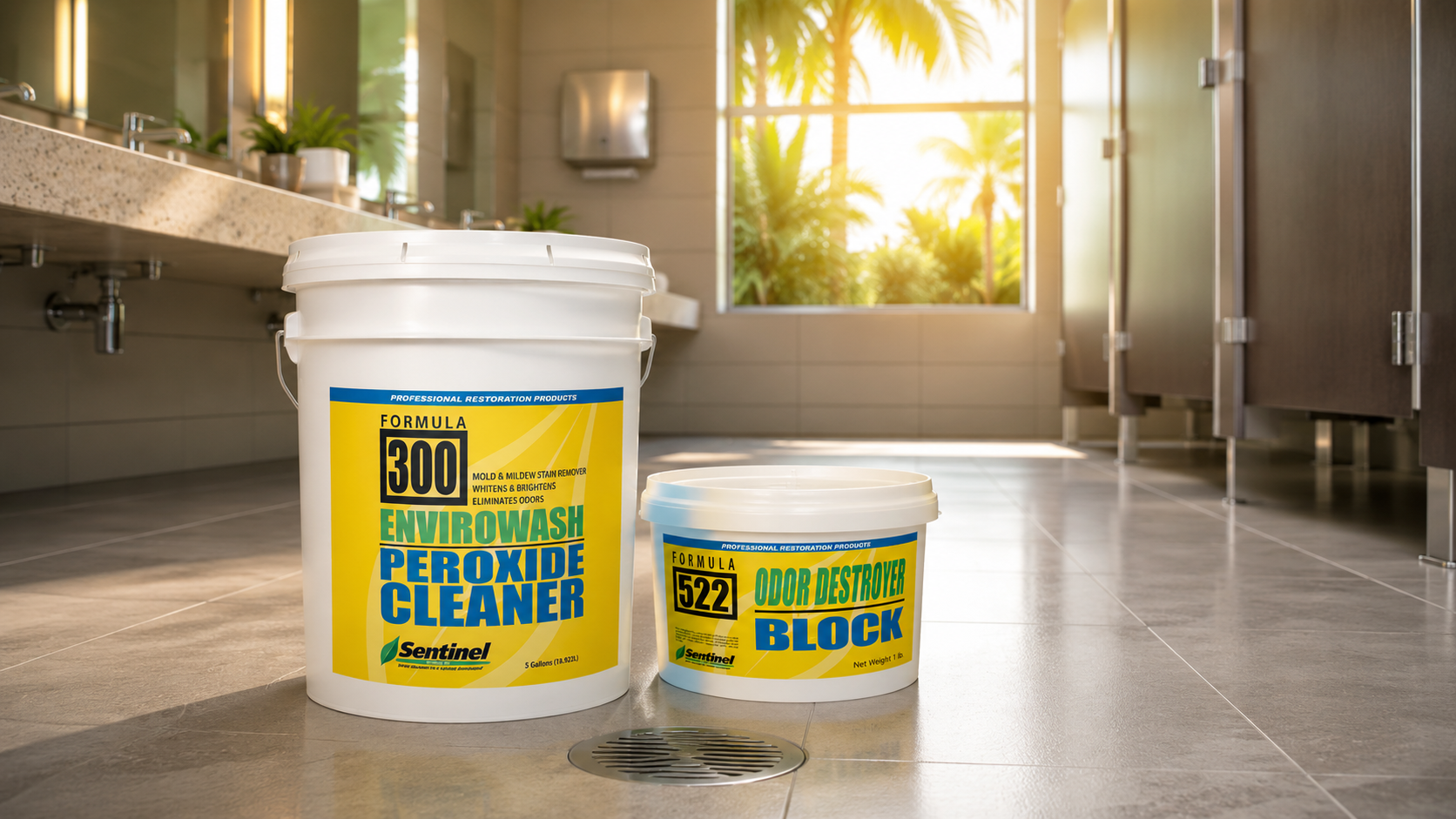
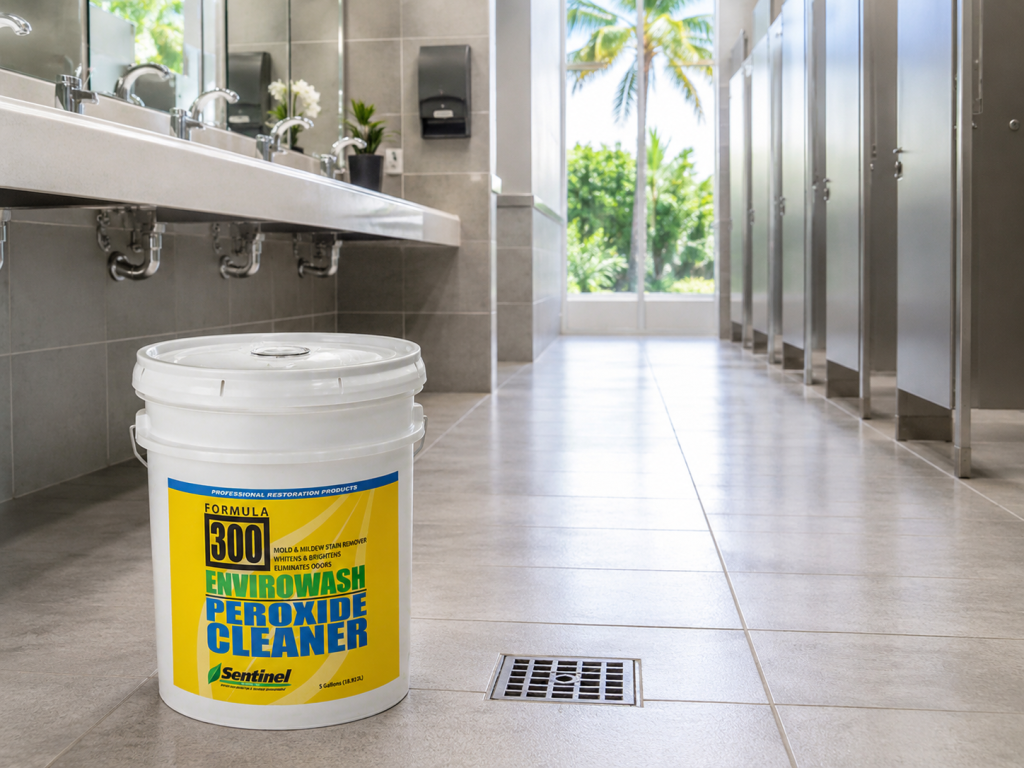
Surface odors in commercial restrooms come from organic soiling that standard cleaners do not fully break down. Urine residue, biological buildup on grout lines, and staining around fixtures are common sources. Sentinel 300 EnviroWash Peroxide Cleaner addresses these directly using a professional-strength hydrogen peroxide formula that oxidizes soils and odors on contact, breaking them down into water and oxygen.
Unlike bleach-based cleaners, the 300 EnviroWash works without harsh fumes in occupied spaces. It cleans, removes organic stains, and eliminates odors in a single application, making it practical for routine summer restroom maintenance where speed and results both matter. It is available in 1-gallon, 2.5-gallon, 5-gallon, and 55-gallon sizes, and is ready to use as packaged. Note that it is not recommended for use on brass or copper fixtures.
For summer restroom programs, the 300 EnviroWash is a strong choice for weekly deep cleaning of tile, grout, and fixture surrounds, where odor-causing organic buildup is most prevalent. You can learn more at the Sentinel 300 EnviroWash product page.
Odor Neutralizers vs. Air Fresheners
This distinction matters in commercial facilities. Air fresheners mask odors with fragrance. Odor neutralizers chemically eliminate the odor molecules rather than covering them. In a high-use commercial restroom, fragrance masking often makes the problem worse because the underlying odor continues to build up.
For restrooms with genuine odor problems, a product like Sentinel 300 EnviroWash used as part of the routine cleaning process addresses the source rather than layering fragrance on top of it. This is particularly important in summer when odors are more intense, and masking is less effective.
Continuous Air Care Dispensers
Continuous air care systems provide consistent fragrance and odor control between cleanings. In facilities where restrooms are cleaned once or twice daily but used hundreds of times, a metered dispenser bridges the gap between cleaning intervals.
Modern commercial dispensers allow you to control fragrance intensity and timing, reducing waste while maintaining consistent coverage. Battery-operated units eliminate the need for electrical installation and can be placed in optimal airflow locations.
For summer, increasing dispenser frequency or switching to a higher-intensity fragrance cartridge can compensate for the elevated odor levels.
Sentinel 522OB Odor Destroyer Block: Continuous Odor Elimination
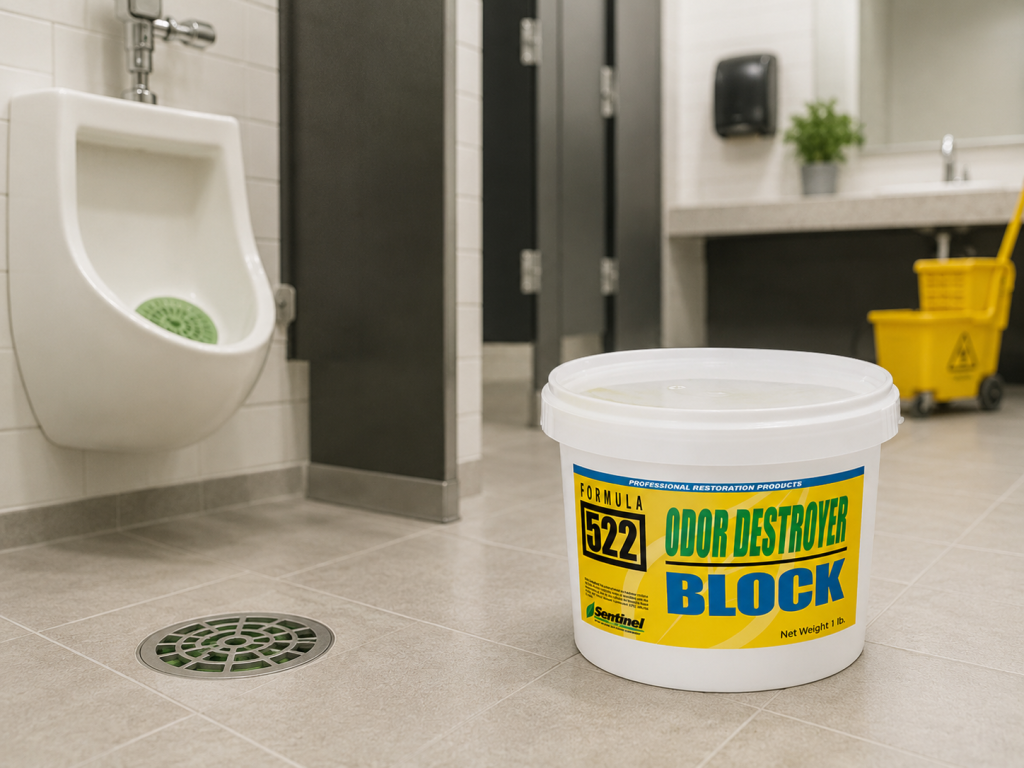
For areas where odors need to be managed continuously between cleanings, the Sentinel 522OB Odor Destroyer Block is a practical solution. It is a semisolid product that blocks and destroys odors at their source rather than just masking them with fragrance. The fresh scent is a secondary benefit; the primary function is active odor elimination.
The 522OB can be placed in restrooms, utility rooms, HVAC returns, dumpster enclosures, locker rooms, and any space where persistent odor is a problem. In HVAC applications, it neutralizes odors before they are distributed throughout the building. It comes in 1-pound and 5-pound sizes, giving you flexibility for single-restroom placement or larger mechanical spaces. More details are available on the Sentinel 522OB product page.
Urinal Screens and Drain Blocks
Urinal screens with built-in deodorizing compounds provide continuous odor control at the fixture level. They reduce backsplash, which reduces floor contamination, and release fragrance and odor-neutralizing compounds with each use.
Odor blocks placed in floor drains serve a similar function, releasing odor-control compounds continuously between cleanings. Combined with a product like the Sentinel 522OB in the broader space, these create overlapping layers of odor management that cleaning alone cannot replicate.
Building a Summer Restroom Odor Control Program
A consistent program combines these elements rather than relying on any single product.
Daily cleaning: Thorough surface cleaning with a disinfectant cleaner addresses visible soil and surface bacteria. This is the foundation, but not the complete solution.
Enzymatic drain treatment: Applied at the end of each cleaning shift or on a scheduled weekly basis to the floor drain. This targets the biological source of odor that surface cleaning cannot reach.
Continuous air care: Metered dispenser running on a schedule appropriate for the traffic level and room size. Adjust frequency upward in summer.
Urinal screens and drain blocks: Changed on the manufacturer’s recommended schedule. Mark the installation date on the screen or block so the replacement schedule is trackable.
Drain trap maintenance: In areas of the facility with floor drains that see low traffic, pour water into the drain weekly to maintain the trap seal and prevent sewer gas from entering through the drain.
The goal is layered protection, with each product addressing a different aspect of the odor problem. No single product does all of this.
Common Mistakes That Let Summer Odors Win
Increasing fragrance instead of addressing the source. If restrooms smell bad, adding more air freshener does not fix the problem. It makes the combination of odor and fragrance more noticeable, not less. Address the source first.
Skipping drain treatment because the drain looks clean. Drain odor comes from inside the pipe and trap, not the visible drain surface. A clean-looking drain can still be producing a significant odor.
Not adjusting the program for the season. A product schedule that worked in February may not be sufficient in July. Review your odor-control program at the start of summer and adjust the frequency or product selection as needed.
Using diluted products at too low a concentration. Enzymatic cleaners and odor neutralizers have recommended dilution ratios for a reason. Over-dilution reduces effectiveness and yields disappointing results, even with quality products.
Frequently Asked Questions About Commercial Restroom Odor Control
Why do commercial restrooms smell worse in summer? Heat accelerates bacterial activity and biological breakdown of organic matter in drains and on surfaces. Humidity keeps odor molecules airborne longer. Dry drain traps caused by excessive HVAC use can also allow sewer gas to enter the building. Summer creates conditions where all of these factors are more pronounced simultaneously.
What is the best product for floor drain odor in a commercial restroom? Enzymatic drain maintainers that use bacterial enzymes to digest organic buildup inside the drain are the most effective approach for persistent floor drain odor. They address the source of the odor rather than masking it. Regular application at the end of the cleaning shift produces the best results.
How often should an enzymatic drain cleaner be applied in summer? In high-use commercial restrooms during summer, a twice-weekly application is often appropriate. Lower-traffic facilities may manage with a weekly treatment. Consult the product label for the recommended schedule, and increase frequency if odors persist.
What is the difference between an odor neutralizer and an air freshener? An air freshener adds fragrance to mask odors. An odor neutralizer uses chemistry to eliminate odor molecules rather than covering them. For commercial facilities with genuine odor problems, neutralizers address the cause. Air fresheners are best used as a maintenance layer after the odor source has been addressed.
Does HJS Supply carry restroom odor control products? Yes. HJS Supply Co. carries Sentinel 522OB Odor Destroyer Blocks, Sentinel 300 EnviroWash Peroxide Cleaner, enzymatic drain maintainers, continuous air care dispensers, urinal screens, and other restroom hygiene products suited for commercial facilities. Contact our team for product recommendations based on your facility type and traffic level.
Get Ahead of Summer Restroom Odors Now
The facilities that handle summer odors well do not wait for complaints. They adjust their programs in June, before the worst of the heat and humidity hits, and use the right combination of products to address drain and surface odors and improve air quality.
HJS Supply Co. carries the restroom hygiene and odor control products your facility needs. Stop in at 2983 Seneca Street in West Seneca, call us at (716) 674-9860, or browse our product lineup at hjssupply.com. Our team can help you build a summer restroom maintenance program that keeps your facility ahead of the season.