Fall Storms Are Coming. Is Your Drying Equipment Ready?
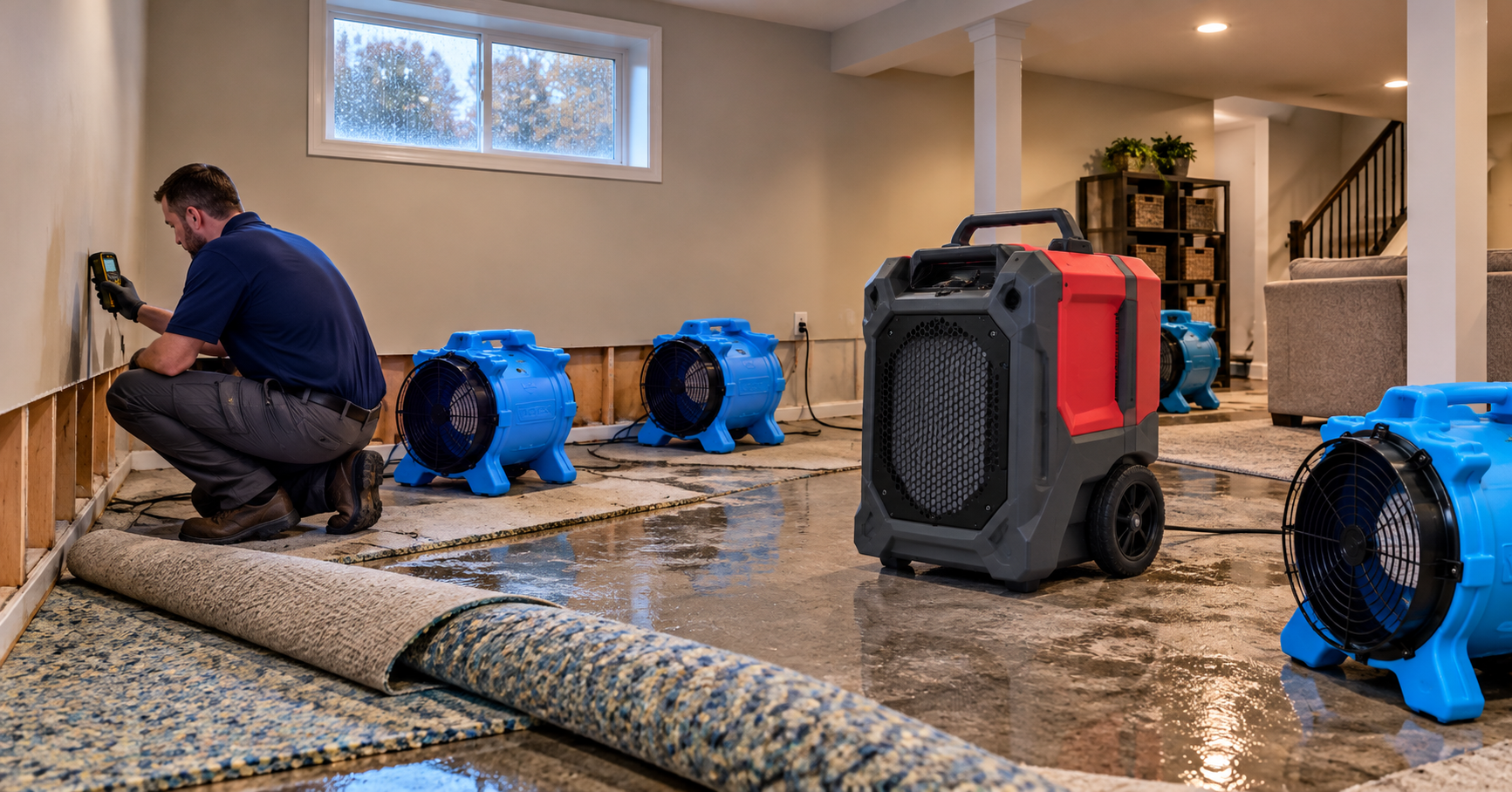
September in Western New York brings more than cooler nights. It brings heavy rain. The tail ends of Atlantic storms, slow-moving fronts off the lakes, and soaked ground can turn a normal weekend into a week of flooded basements, backed-up floor drains, and wet carpet across Erie County.
The first big storm of fall is a stress test for restoration contractors, for carpet cleaners who take water jobs, and for facility managers in older buildings. The jobs all come in at once. Contractors who win those jobs and dry them correctly already have the right water-drying equipment staged and ready.
Here is what that equipment looks like, how each piece fits into a proper drying plan, and when renting makes more sense than buying.
Why Speed Matters on a Water Job
Water damage gets more expensive by the hour. Clean water from a broken supply line or a rain leak can become contaminated within a day or two as it picks up soil and organic material from the building. The EPA’s guidance on mold and moisture says to dry wet materials within 24 to 48 hours to help prevent mold growth.
That window is tight. A shop vac and a box fan will not dry a finished basement in 48 hours. Professional structural drying depends on three things working together:
- Water removal to get standing water out fast
- Airflow to pull moisture out of carpet, pad, drywall, and framing
- Dehumidification to capture that moisture from the air before it settles back into the building
Leave out any one of the three and the job drags on, the building stays wet, and the risk of secondary damage climbs.
Step One: Get the Standing Water Out
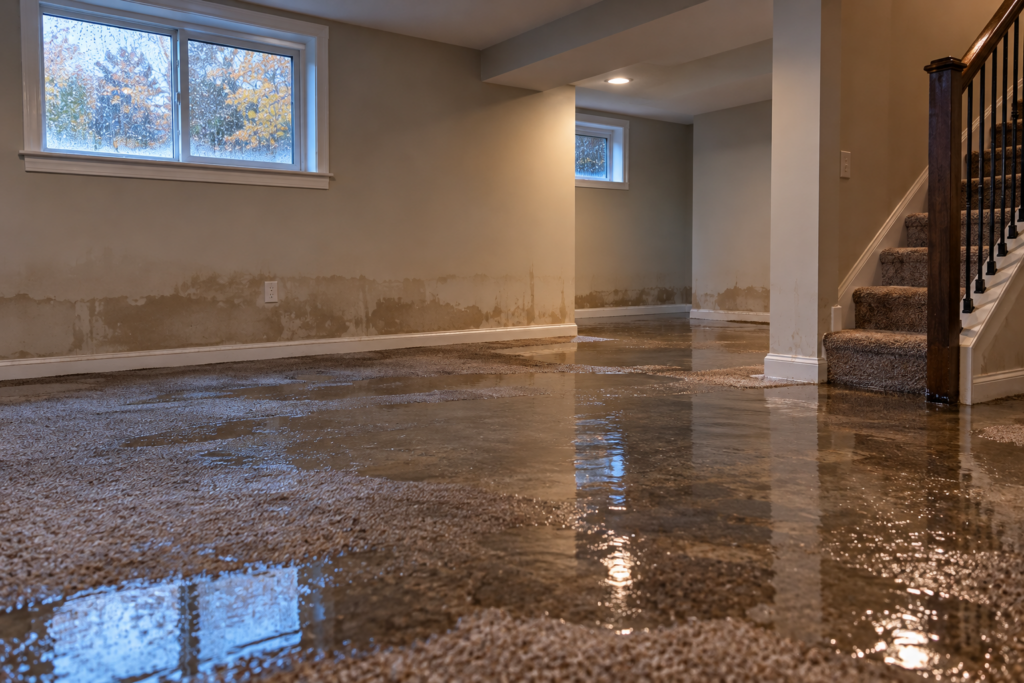
Every gallon you extract is a gallon your dehumidifiers don’t have to pull from the air. Extraction is the fastest and cheapest drying you will ever do, so finish it before you put the air movers down.
For heavy water, a dedicated flood extractor or pumper saves hours. The HydraMaster Titan H2O Flood Extractor is built for exactly this kind of job. HJS also carries a full line of portable restoration extractors for smaller jobs and tight spaces a truck-mounted hose cannot reach.
Tip: Make several slow passes on wet carpet. Fast passes leave more water behind than most technicians realize.
Step Two: Move the Air
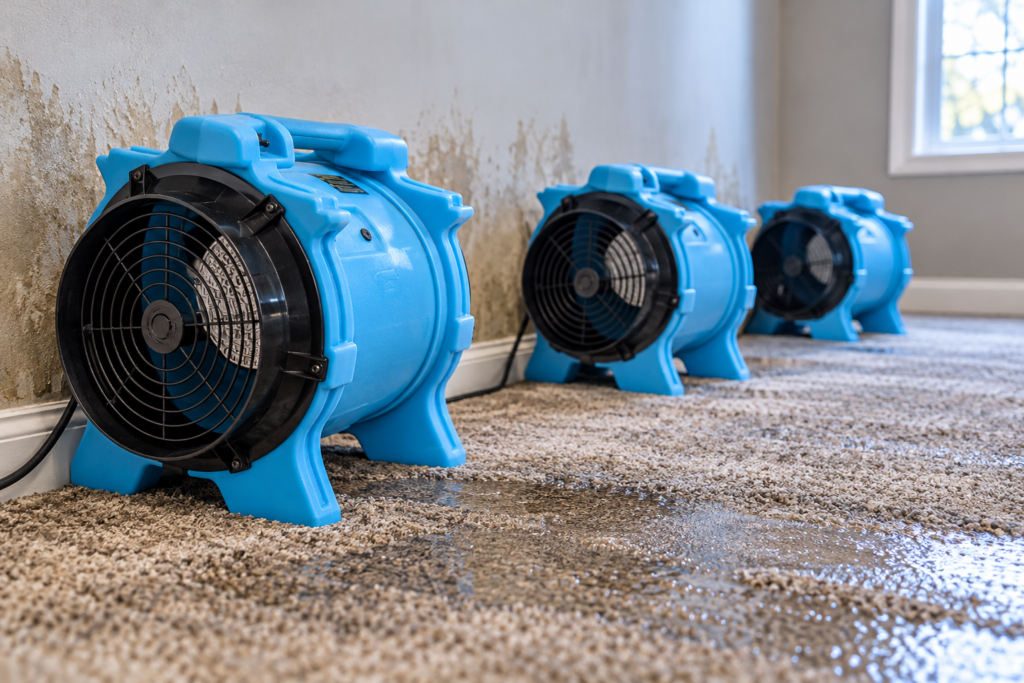
Once the standing water is gone, air movers do the heavy lifting. They push fast-moving air across wet surfaces so carpet, pad, and wall cavities dry faster.
The right air mover depends on the space:
- Low-profile units like the Dri-Eaz Velo Low Profile Air Mover slide under cabinets, beds, and toe kicks
- Workhorse centrifugal units like the Dri-Eaz Velo Pro Air Mover and the Phoenix AirMax Radial Air Mover handle carpet and walls in larger rooms.
- Axial fans like the Dri-Eaz Vortex move large volumes of air across open areas such as basements and commercial spaces.
Browse the full lineup on our air movers page.
How Many Air Movers Do You Need?
The industry standard for professional drying is the IICRC S500 Standard. It explains how to place air movers based on wet-floor square footage and the linear footage of wet walls. As a general rule, place air movers along wet walls, all angled the same way so air circles the room. Then add units for wet floor areas and for spaces off the main room, such as closets and alcoves.
Step Three: Pull the Moisture Out of the Air
Air movers put moisture into the air. Dehumidifiers take it out. Without enough dehumidification, the room gets humid, evaporation slows down, and moisture moves into materials that were never wet in the first place.
LGR Dehumidifiers
Low grain refrigerant (LGR) dehumidifiers are the backbone of most residential and light commercial drying jobs. They keep pulling water from the air even as the room dries, helping you reach your drying goals faster.
Popular models at HJS Supply include:
- Dri-Eaz LGR 7000XLi Dehumidifier, a high-capacity unit with the Command Hub touchscreen controller
- Dri-Eaz Revolution Dehumidifier, stackable and easy to transport
- Phoenix R250 LGR Dehumidifier, compact and built for tight spaces
- Phoenix DryMAX XL LGR Dehumidifier, a strong choice for larger jobs
See every option on our dehumidifiers page.
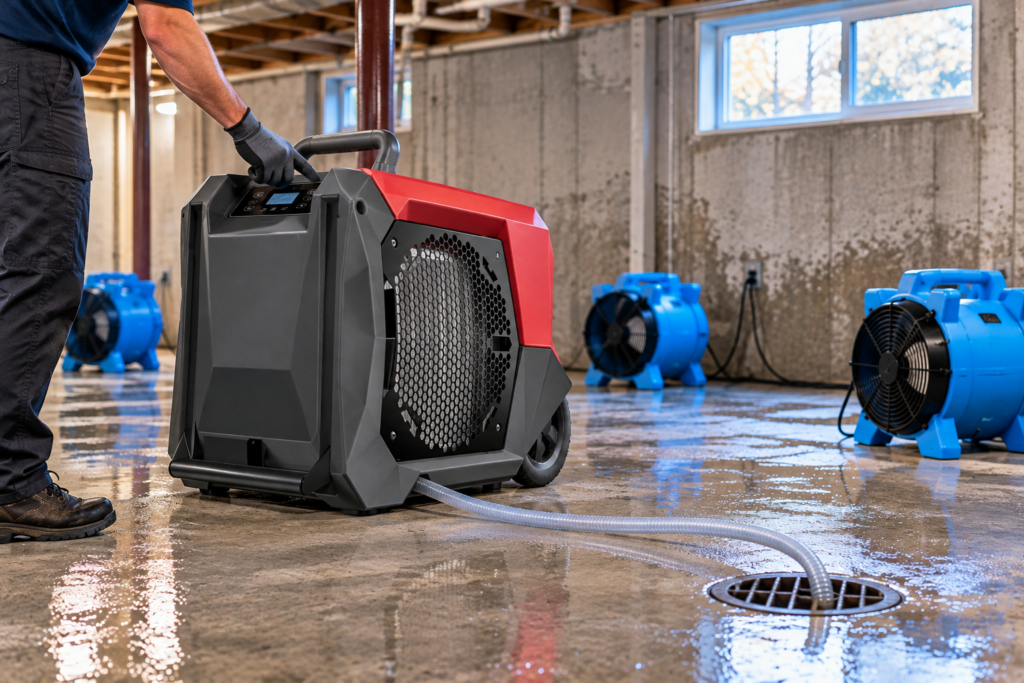
Desiccant Dehumidifiers for Cold Basements
This is where Western New York jobs get tricky. Refrigerant dehumidifiers lose efficiency as temperatures drop. An unheated basement in late fall, a vacant commercial space, or a building with the heat off can leave an LGR unit struggling.
Desiccant dehumidifiers work well in cooler conditions and are a smart addition for fall and winter jobs. Pairing desiccant units with heat drying systems can speed up drying significantly in cold buildings.
Do Not Forget Air Quality
Water damage stirs up dust, debris, and possible mold spores. That is especially true with Category 2 and Category 3 water, which is dirty or contaminated, and in older buildings. HEPA air scrubbers capture airborne particles. They can also be set up to create negative air pressure, which keeps contaminated air contained and protects the people in the building and the areas that did not get wet.
Rent or Buy?
Not every contractor needs a warehouse full of drying equipment. HJS Supply offers both options, and the right choice depends on your workload.
Buying makes sense when:
- Water jobs are a regular part of your business
- You need equipment available the moment a call comes in
- You are building out a restoration division and want to own your core fleet
Renting makes sense when:
- A storm creates more jobs than your fleet can cover
- You need a specialty unit, like a desiccant or flood pumper, for one job
- You are a carpet cleaner or facility team handling an occasional water job
Many of our customers do both. They own a core set of air movers and LGR dehumidifiers, then rent restoration equipment from HJS when a big storm hits. Request a rental quote here.
Common Water Damage Drying Mistakes
Skipping extraction. Setting up air movers on soaked carpet without thorough extraction adds days to the job.
Too much airflow, not enough dehumidification. Air movers without enough dehumidifier capacity make the room humid. Balance your setup.
Ignoring temperature. Cold rooms dry slowly. Use heat and desiccants when temperatures drop.
Pulling equipment too early. Surfaces can feel dry while the framing and subfloor are still wet. Confirm with moisture readings before you pull equipment.
Waiting for the storm to prep. When the forecast turns, everyone calls at once. Check your fleet, clean your filters, and test your units now.
Frequently Asked Questions About Water Damage Drying Equipment
How long does it take to dry a flooded basement?
Most professionally dried basements take about three to five days. The exact time depends on the amount of water, the materials involved, the temperature, and how much equipment is in place. Thorough extraction and a balanced setup of air movers and dehumidifiers shorten that time.
What is the difference between an LGR and a desiccant dehumidifier?
LGR dehumidifiers use refrigerant coils to condense moisture out of the air and work best in warm conditions. Desiccant dehumidifiers use a material that absorbs moisture and perform better in cold conditions, making them useful for unheated basements and fall or winter jobs.
Can I rent water damage drying equipment in Buffalo, NY?
Yes. HJS Supply Co. in West Seneca rents dehumidifiers, desiccants, air movers, HEPA air scrubbers, flood pumpers, and heaters to contractors and facilities across Western New York.
How many air movers does a water damage job need?
It depends on the wet square footage of the floor and the linear footage of wet walls. The IICRC S500 Standard provides placement guidelines, and the HJS team can help you plan your setup.
Get Your Drying Fleet Ready Before the Next Storm
Fall storm season in Western New York does not wait. Contractors and facility teams with the right water damage drying equipment respond faster, dry jobs correctly, and avoid costly secondary damage.
HJS Supply Co. carries Dri-Eaz and Phoenix restoration equipment for sale and for rent, along with the expertise to help you build a drying plan that works. Stop by 2983 Seneca Street in West Seneca, call us at (716) 674-9860, or explore our restoration equipment online. Want to sharpen your team’s skills? Check out our restoration training and education. Let us show you how.